
In this expansive conversation for [NIE]ZALEZNOSC, he reflects on turning a commercial vending machine into an autonomous dissemination mechanism for experimental sound, acoustic ecology as field investigation into post-war urban trauma, the necessary compromise between self-funding and institutional autonomy, and the insular dwarfism of the local avant-garde.
Marcin Barski is a Polish translator, sound publisher, curator, and sonic artist deeply rooted in the Krakow experimental sound milieu. Co-founder of Audio Tong and Mathka imprints, longtime producer of the Audio Art Festival, and active member of the Muzyka Centrum association. Together with Marcin Dymiter, he co-founded the Soundscape Institute (Instytut Pejzażu Dźwiękowego), investigating acoustic ecology, field recording methodologies, and deep listening practices.

The Irony of Monetization: How a Vending Machine Outsold an Independent Record Label
Shall we begin with Audiomat? It is a fascinating undertaking, as nothing quite like it seems to exist anywhere else.
 NIEZALEZNOSC1:11:46[NIE]ZALEŻNOŚĆ - Marek Chołoniewski - SMEvia: Audiomat · Marek Choloniewski
To be honest, I never specifically checked — perhaps similar contraptions exist, perhaps not. I know various vending machines operate out there: in Katowice, for instance, one can purchase fresh bouquets from an automated locker. But for experimental discs, I had never encountered one. The impulse arrived around the 2012 edition of the Audio Art Festival. Marek Choloniewski was eager to introduce an unorthodox mechanism. I possessed a somewhat wry, satirical intuition regarding the hyper-capitalization of culture: physical albums barely sold anymore, recorded audio permeated every digital corner in overwhelming quantities, so why not treat avant-garde discs like candy bars, sodas, or hot dogs dispensed from a coin-operated slot? I proposed it half as a jest. Yet it proved entirely viable, morphing into an immensely entertaining project.
 LIVE54:44Plejrek 84 – 26.04.2017 - SMEvia: Marek Choloniewski · Electroacoustic Music Studio
Curiously enough, during its inaugural year, Audiomat sold more physical records than my label had managed across several prior seasons! The satire inadvertently turned back on me. Price played a role, but primarily it was the physical novelty: people genuinely relished dropping a five-zloty coin into the slot and witnessing an avant-garde CD clatter down into the steel retrieval tray.
Prior to that, I operated two independent labels. The first was Audio Tong, which began as a netlabel distributing MP3 files freely, later expanding into physical editions. Beyond publishing, we staged monthly live concerts, cultivating a meeting ground for local and traveling improvisers. For several years we maintained a strict monthly cadence, gathering a devoted circle. It was an intensely activist period. Later, together with Lukasz Szalankiewicz (Zenial) and Daniel Brozek, we expanded the venture until organizational paths diverged.
I subsequently launched Mathka, a venture dedicated exclusively to tactile objects. Running for several years, it yielded roughly fifteen titles. Mathka functioned as a conceptual label: I treated each release like an authored novella, prioritizing narrative solo investigations. Packaging resembled scaled-down vinyl gatefolds housing the disc alongside custom booklets. Eventually, sustaining such laborious hand craftsmanship against minimal market interest proved unsustainable.
Press runs and financial returns were far too miniature to ever constitute a commercial enterprise. It was never intended as commerce, functioning purely as cultural solidarity for our peers. Had profit been our compass, we would have curated crowd-pleasing names and conventional formats. Our dogma was the opposite: issuing radical statements regardless of whether zero copies found buyers. The entire operation was legally unregistered, existing solely on volunteer dedication.
Quantities varied: standard CD pressing runs required a minimum of 500 units, most of which still sleep quietly in my cellar. For handmade CD-Rs, we produced runs of 40, 50, occasionally 100 copies. Standard pricing sat at 20 zlotys, calibrated simply to recoup print costs and blank media.
What prompted you to step away from label publishing?
It was not merely economic fatigue. Having persisted for years, a moment arrived where internal satisfaction evaporated. I felt I had articulated whatever statement I had set out to make. Producing physical commodities no longer fulfilled an inner imperative. Disconcerting paradoxes recurred: you release an exceptional record that garners twenty or thirty glowing international reviews, yet within domestic borders, not a single physical copy sells.
Such artisanal hobbyism demands immense unpaid labor: answering correspondence, packaging parcels, queuing in post offices. When silence greets your efforts for months, stamina wanes. Yet when a dedicated listener or distant festival organizer connects meaningfully with a release, the creative validation is immense.
How did the mechanical hardware of Audiomat come into being?
I located an outfit outside Krakow specializing in refurbished commercial snack dispensers. We purchased an older model quite affordably. Technicians stripped out refrigeration compressors, adjusted spiral coils to securely cradle jewel cases, and flashed a basic coin validator. We hauled it in, plugged it into the wall, and managed operations ourselves. Comical glitches occurred: coins would jam, spirals would stick. Marek Choloniewski oversaw ongoing technical maintenance.
Originally positioned inside the cloakroom of Bunkier Sztuki Gallery, it later relocated to the gallery cafe. The fixed 5-zloty price covered only bare manufacturing expenses: roughly 3 zlotys for custom packaging and 1.80 for blank media and burning. Thousands of discs cycled through the mechanism, spawning loyal collectors who returned weekly to claim fresh installments.

The Soundscape Institute: Acoustic Ecology, Collective Memory, and the Trauma of Elblag
How did the Soundscape Institute (Instytut Pejzazu Dzwiekowego) emerge from this publishing backdrop?
Music as a codified language had temporarily exhausted its appeal for me. It ceased telling the kinds of human narratives that stirred my curiosity. My fascination shifted toward the perceptual act of listening itself: acoustic ecology, field recording, soundscapes as societal artifacts. Marcin Dymiter and I joined forces to initiate a forum for non-academic reflection, essays, and auditory journeys.
Initially envisioned as a periodical, the rigors of publishing schedules proved prohibitive for long-form essays and sonic expeditions. Gradually our focus migrated into spatial exhibition. We mounted an extensive exhibition exploring field recording without visual distractions: minimalist wall texts, sparse lighting, and pristine multi-channel sound spatialization. We toured it across the Czech Republic, Elblag, Warsaw, and Krakow.
Another major trajectory encompassed sound-guided non-guidebooks. We developed GPS-triggered mobile software: listeners donned headphones and navigated city quarters, where alleyways, subway tunnels, and courtyards automatically triggered archival recordings and resident recollections. We realized five iterations across Poland.
Our most profound and challenging engagement took place in Elblag, working with the adventurous Galeria EL. Elblag represents a unique urban trauma: following World War II, virtually one hundred percent of its population turned over. Only two or three percent of pre-war residents remained, replaced by displaced populations from eastern borderlands. The historic core lay in complete ruins for decades until an eccentric postmodern reconstruction took place in the late 1980s: historicist facades resembling Renaissance burgher houses were grafted onto modern socialist apartment blocks equipped with intercoms and concrete stairwells. By day it evokes an antique postcard; by evening it empties into a quiet bedroom dormitory.
We interviewed residents concerning historical memory and latent anxieties. Subterranean fears lingered: rumors that pre-war German families might return to claim original properties. Documenting these spectral layers through acoustic testimony proved extraordinary.
Did municipal bodies support such socially sensitive experimental field work?
We adopted a strict political boundary: we never apply for municipal or ministerial grants as independent applicants. We conceive the project, approach host institutions, and stipulate: ’Here is the project. If you wish to present it, fund it from your institutional resources and shoulder all administrative bureaucracy.’ This was our tactic for preserving creative sovereignty: refusing to expend our days writing paperwork where bureaucrats dictate which cultural themes qualify as fashionable.
Naturally, this model precludes surviving purely off art. I sustain myself through professional translation, Marcin Dymiter works in journalism and related media. Yet that economic self-sufficiency outside culture is precisely what empowers us to speak without self-censorship.

The Grant Trap: Locating the Authentic Boundaries of Autonomy
Where then do the real boundaries of cultural independence lie?
Absolute independence is an ungrounded fantasy. Every artist and initiative remains embedded in networks of mutual reliance. Whether situated within a municipal museum or a DIY basement, inevitably a director, landlord, or funding body intervenes to declare: ’We cannot allow this, it risks controversy or subsidy withdrawal.’ The sole domain within your command is the degree to which you surrender your labor to administrative subservience.
Foundations and subsidies provide temporary respite. But the defining litmus test remains: how will you proceed the moment institutional funding evaporates? Are you capable of maintaining your practice with zero funding? Can you unequivocally decline capital when it requires distorting your artistic core?
Too often insidious co-optation takes hold: chasing annual grant guidelines, organizers twist their projects to fit fashionable keywords — suddenly pivoting to trending themes regardless of organic interest. At that juncture, one ceases being an independent creator and becomes an administrative clerk servicing grant priorities.
You stress the imperative of continuing without pause even when funding terminates. How is this maintained in practice?
The simplest yet most demanding remedy is maintaining an autonomous livelihood outside the cultural sector. A reliable daylight trade that feeds your household. When a cultural initiative expands rapidly, the temptation arises to scale up: leasing dedicated offices, employing administrative staff, assuming fixed overheads. The moment an annual grant application is rejected, the entire house of cards collapses under its own overhead.
I favor modular, guerrilla formats that can pause overnight without debts or logistical catastrophes. When large translation commissions demand full focus, I suspend cultural production. When bandwidth returns, I resume audio work. That structural flexibility provides psychological immunity against bureaucratic coercion.

Klub Baza, Instytut Intuicji, and the Diagnosis of Insular Dwarfism
What forms your current cultural focus in Krakow?
Presently I concentrate on curating intimate concerts of experimental sound and free improvisation. Krakow gained an exceptional enclave: Klub Baza, run by Wojtek Kwapisinski. He demonstrates astonishing generosity toward uncompromising acoustic expressions. We have presented over twenty concerts there, events that would have found zero hospitable soil anywhere else in the city.
Wojtek provides space, equipment, time, and warm lodging for traveling artists even when an audience numbers merely five listeners! That dedication is extraordinarily rare. Commercial venues universally reject zero-margin programming: floors require mopping, utility bills require payment, bar revenue dictates viability.
Krakow remains a profoundly paradoxical environment. Mass tourism spectacles and prestige festivals flourish with expansive municipal promotion, yet systemic grassroots infrastructure remains virtually non-existent. Outsiders envision Krakow as a sanctuary of jazz and classical heritage, yet real underground vitality rests upon the shoulders of a handful of stubborn individuals.
Alongside Baza, extraordinary work is achieved by Instytut Intuicji. Operating an artist-run rehearsal enclave that doubles as an intimate gallery, they host world-class master improvisers for ten or fifteen listeners while practicing their own rigorous craft. We routinely join forces to stage shared gatherings.
How does the local musical ecosystem fare today? Does an integrated community exist?
It is a complex reality. During the early days of Audio Tong and Mathka, vitality was palpable with enthusiastic audiences. The decisive fissure occurred when mega-festivals eclipsed regular club culture. Audiences grew accustomed to attending Unsound once a year for international headliners rather than nurturing obscure domestic artists week after week.
The scene fragmented into secluded archipelagos. This recalls a release from 2009 on Audio Tong by DMP Trio (Philip Palmer, Slawek Maler, Pawel Dziadur) — furious, uncompromising free-jazz noise. They titled the album ’Insular Dwarfism’. In evolutionary biology, this describes the phenomenon where species confined to isolated islands without predators or external gene exchange become physically smaller across generations while retaining their morphological identity.
That title offered an uncanny diagnosis of Krakow: lacking the means to host foreign peers and deprived of resources for touring abroad, the scene turned inward. The silver lining was the incubation of extraordinary, idiosyncratic virtuosos of free improvisation. The drawback was chronic deprivation of fresh international cross-pollination.
You mentioned fluctuating attendance: who populates the audiences at Klub Baza?
It varies drastically with the sonic vernacular. When Wojtek books punk or hardcore — like the duo SIKSA — the cellar is packed to bursting. When I present austere noise or electroacoustic improvisation, turnout fluctuates: sometimes five or six souls attend; other times, when hosting established international innovators like Zsolt Sores from Budapest, thirty or forty listeners gather.
A committed core emerges over time. Familiar faces return: fellow practitioners and loyal adventurous listeners. Nonetheless, substantial demographic attrition has occurred: gifted artists persistently migrate to Warsaw or Berlin where economic viability and concert density are vastly superior. Inflow of fresh blood remains modest, rendering every newly arrived curious listener exceptionally precious.

Between Festival Flares and Prolonged Silence: The Urgency of Grassroots Consistency
Does hope remain for breaching this insular circuit through decentralized networks and horizontal solidarity?
The impediment transcends mere publicity. It reflects the structural ecology of urban life. Cities like Warsaw or Gdansk nurture sustained spaces that confer societal legitimacy onto experimental culture. They offer stable monthly residencies where people gather not merely to hear performances, but to debate, converse, and spark collaborations. Genuine artistic ecosystems coalesce around these steady anchors.
Krakow suffers from an acute imbalance: world-renowned festivals like Unsound and Sacrum Profanum produce brilliant week-long spectacles, followed by months of absolute hibernation. What the city lacks is the bridge between these elite fireworks and steady, humble grassroots labor (praca u podstaw). Sound culture requires habitual presence: the quiet assurance of dropping by a familiar space once a week to discover experimental sound among kindred spirits.
What about bridges between the Music Academy, where Marek Choloniewski directs the SME, and the underground club scene?
Marek accomplishes wonders within the Electroacoustic Music Studio and his GrupLab workshops, yet it largely remains an academic enclave. Information flows among composition and visual arts students, rarely reaching street-level subcultures. For club DJs or DIY noise artists to cross into conservatory halls, neutral shared grounds and accessible framing are essential.
Ultimately, audience magnitude is not the primary criterion. Even if only three listeners occupy the room, if the practitioners on stage possess unambiguous clarity about why they are there and what they communicate, the artistic current persists. Authentic independence originates in that uncompromising inner resolve to pursue one’s path regardless of whether an arena cheers or an empty basement echoes.
- Mathka [label / press]label / publisher. KORINNIA map (1 conversation)
- Marcin Dymiter [person]composer, curator (Poland). KORINNIA map (1 conversation) · Night Report: Adam Frankiewicz — 'I Have Learned to Listen Over These…
- Instytut Intuicji [person]person. KORINNIA map (2 conversations) · Marek Chołoniewski: SME, Forty Years of Muzyka Centrum, and the Sonic…
- Marcin Barski [person]curator (Kraków, Poland). Linked with: Muzyka Centrum. KORINNIA map (2 conversations) · Night Report: Adam Frankiewicz — 'I Have Learned to Listen Over These…
- Paweł Dziadur [person]performer (Poland). KORINNIA map (1 conversation)
- Siksa [band / project](2013). band / ensemble (Poland). KORINNIA map (1 conversation)
- Zsolt Sőrés [person]composer, curator. KORINNIA map (1 conversation)
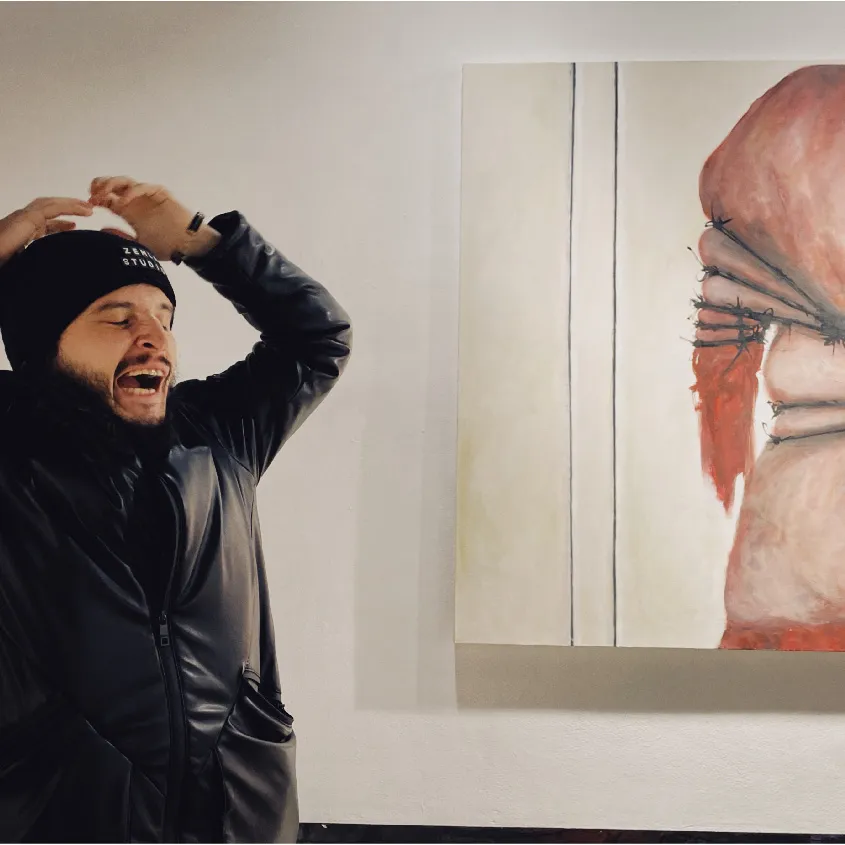
Dr. Myroslav Trofymuk
Born in Lviv. Designer, director, musician, researcher, founder of ZEMLA STUDIO. Master of classical philology and digital marketing, PhD in the history of Ukrainian literature. Member of the National Union of Journalists of Ukraine. Since 2022 he has authored the CENTRUM MUNDI audio show for Polish Radio for Ukraine, continuing the same research into the contemporary music scene in Ukraine and Poland.
Full bio →


