
A venue for free improvisation, Tuesday jams, folk dancing, and communal gatherings, documented here through a candid account of grassroots autonomy, exhausting physical labor, and the looming arrival of commercial real estate redevelopment.
Przestrzen prywatna was an independent cultural sanctuary established and directed single-handedly for several years in a hidden factory courtyard in downtown Warsaw. Free from public subsidies and institutional machinery, the venue hosted concerts of free improvisation and authentic folk music, open Tuesday acoustic jams, communal folk dances, and independent theater. With the entire compound acquired by a commercial property developer, the space faces imminent demolition. Throughout the archival recording, the host chooses to keep his personal name anonymous.

From the Krasinski Library Squat to the Factory Sanctuary
Earlier I was active at the Krasinski Library building on Okolnik Street, right opposite the Fryderyk Chopin University of Music. It was a magnificent pre-war structure. Together with friends, we practically squatted the building, until municipal authorities eventually evicted us. Yet over three intense months, I managed to curate around two hundred public events — exhibitions, theatrical performances, acoustic concerts — entirely without admission fees. Even Gazeta Wyborcza ran a feature on us. Ultimately, the city shut it down.
Following that, an acquaintance rented the factory studio where we are sitting right now. He held the lease for two years without hosting a single event. He suggested: ’Why don’t you do something here?’ I agreed to step in. He stepped aside, having no concrete vision, and I started putting on concerts, primarily focused on free improvisation, sometimes three nights a week. The creative hunger, particularly among acoustic folk circles, was palpable. I invited jazz pianist Andrzej Jagodzinski, who had performed in our library project. After playing, he looked around and said: ’Why not turn this into a permanent stage?’ Within a month, the venue caught fire.
Naturally, I pay rent for this property — and the sum is substantial. It is central Warsaw, running several thousand zlotys monthly. The physical conditions were forbidding: no central heating, no hot water. I had to construct a fireplace and install a water-jacket heating system myself so the premises would remain usable in winter. Unpredictable overheads accumulate constantly. Experimental music generates no wealth. For a long time, guests brought their own refreshments. Only last year did I secure a bar permit to sell simple drinks. Previously, I held external income to cross-subsidize the rent; now it is far tighter, but the venue perseveres.
The heaviest obstacle is operating in absolute isolation. I have zero staff. Booking, bar service, cleaning, rearranging seating layouts between an improv session and a theatrical piece — every task falls on me. I have not taken a single day off in three years. The critical reality is that a real estate developer has purchased the entire compound: the historic factory, tenements, and courtyard. This space will soon cease to exist. I have made peace with this fact and am scouting alternative premises, but regulars react with profound emotion — many literally with tears in their eyes.
The Krasinski Library on Okolnik Street in Warsaw was founded in 1844 as a premier scientific repository. Devastated during the 1944 Warsaw Uprising when occupying forces burned priceless national archives, the pre-war shell later briefly sheltered grassroots cultural initiatives before city intervention.

Courtyard Acoustics, International Travelers, and Non-Commercial Jams
The acoustic warmth of these walls astonished me. The natural resonance is exceptional, attracting seasoned players from across the globe: the United States, India, Canada, Thailand, Ukraine, Belarus, Italy, and the Netherlands. I had no financial guarantees to offer; artists touring through Warsaw discovered the room by word of mouth and requested an evening to perform. The majority of concerts carried free admission, with modest donations collected to cover travelers’ transport. The bar generates minimal revenue, barely sufficient for electricity. It is reciprocal cultural solidarity, not an entertainment business.
Currently, I am registering a cultural foundation. I am finalizing the charter to apply for project grants so visiting musicians can receive legitimate fees. Up to now, participation was purely voluntary. When legends like Witold Broda or Krzysztof Knittel expressed interest, we cleared the calendar immediately.
 LIVE39:02ХАТНЄГРАННЯ 99 - eclectic syncretism - LIVE AT VOX ELECTRONICA 2019via: Krzysztof Knittel
A committed community took shape here. For instance, our friend Tadeusz acts as a discreet guardian of harmony during our Tuesday jam sessions. When an unfamiliar musician enters and aggressively plays over others or breaks the acoustic balance, we avoid confrontational outbursts. During intervals, we quietly speak with them and share the venue’s communal ethos. Consequently, regular guests feel secure, respected, and unhurried.
These are not crowded showcase jams common elsewhere in Warsaw, where participants show off speed or routine jazz licks. Here, everything revolves around pure spontaneous improvisation — sonic gestures existing solely in the present moment, never to be duplicated. For this reason, I refuse to publish complete concert footage online, sharing only brief glimpses. If someone seeks genuine insight, they must enter physically and listen for an hour or two. Often musicians hand homemade percussion to the audience, erasing the boundary between stage and spectator.
Eufemia (Nowa Eufemia) was an iconic underground club operating from 2012 to 2017 in the basements of Warsaw’s Academy of Fine Arts. A crucible for noise, free jazz, and interdisciplinary performance, its closure marked the decline of autonomous venues across the capital.

Exhaustion, the Price of Autonomy, and Institutional Distance
Collaborating with municipal institutions is intricate. Theoretically, public subsidies exist, but I feel an innate resistance toward municipal machinery. I prefer self-determination, even under intense physical strain. Launching a foundation is a practical compromise aimed strictly at compensating visiting artists, not maintaining building bricks. My ambition is to close this chapter on my own terms, transferring the ethos to a new location with sustainable foundations. Single-handed endurance cannot be sustained indefinitely.
Autonomy is a deliberate choice. It remains invigorating as long as baseline financial liquidity holds. But when funds dry up, every day turns into tactical triage: paying rent, covering power utilities, repairing floorboards worn down by years of folk dancing. For four consecutive years, we hosted traditional dancing: Breton, Italian, Balfolk, Capoeira, and Iberian styles, entirely without public relations campaigns. Aggressive marketing might raise revenue, but it destroys intimacy. The venue thrives precisely because it remains hidden.
Bar receipts and occasional private rentals for rehearsals or closed gatherings help cover basic rent. When someone hires the hall privately, those commercial earnings directly subsidize our artistic calendar. The rest defies standard business models: visitors discover the space through human bonds and return with their families. I remain detached from the institutional grant circuit. This independence is not a romantic pose; it is a tangible choice carrying a heavy personal toll.
Nevertheless, independence does not equate to isolation. Anyone approaching with integrity will find our doors open. Political backgrounds matter less than honesty and mutual respect. When someone proposes a workshop, we analyze the numbers: attendance, admission tiers, and fair splits. If a commercial promoter attempts to exploit the space for quick profits while leaving crumbs, negotiations terminate immediately. Conversely, for an educational initiative introducing traditional instruments to local children, we opened the hall free of charge.
This whole path rests on intuition. There are no accumulated reserves. You survive month to month: rent paid, firewood purchased, food on the table, and balances return to zero. Periodic exhaustion inevitably sets in, tempting one to take a standard salaried position for security. Grassroots autonomy grants incomparable freedom, coupled with unrelenting pressure.

Ukrainian and Belarusian Traditions: Wierchowyna and Ethnoquarta
Ukrainian and Belarusian cultural threads integrated effortlessly into our schedule. The vocal ensemble Wierchowyna — Warsaw-based singers dedicated to authentic polyphony from the Carpathians and Polissia — performed here often. The group Ethnoquarta, featuring Ukrainian folklorist Uliana Gedzik, presented remarkable acoustic improvisations. Immigrant communities from Belarus and Ukraine gathered regularly for evenings of poetry, song, and discussion. Participants brought homemade dishes, shared minimal electricity contributions, and sustained fellowship without pretension.
We experimented with serving hot food — making vegetable stews and potato pancakes for audiences. We soon realized it was physically unsustainable: tremendous effort with minimal recovery. Practical experience demonstrates that nothing should be offered entirely free. Even a token contribution of 10 zlotys establishes respect and conscious commitment, preventing entitlement from eroding community effort.
Space itself exerts a decisive influence. If a room lacks emotional resonance, audiences will not return. We survived every trial here: flooded cellars, mold remediation, endless masonry repairs. Atmosphere matters far more than pristine infrastructure. One could pursue radical subcultural isolation, but that merely traps people inside an insular bubble. The true challenge lies in remaining hospitable while firmly enforcing house boundaries. If visitors step behind the bar uninvited, you must clearly remind them that this sanctuary represents someone’s personal responsibility.
- Secure stable external income or financial reserves before launching an autonomous space.
- Establish house rules and token admission charges from day one.
- Avoid unconditional free admission, which undermines mutual respect.
- Cultivate atmosphere and human resonance rather than chasing commercial booking trends.
- Guard hospitality boundaries strictly, even within seemingly familial gatherings.
This haven was constructed over years through trust, personal relations, and stubborn dedication. I am uncertain if you anticipated this exact conversation, but it allowed me to reflect deeply on this entire journey. This is the conclusion. Ave, ave Christus Rex.

- The Host [person]person
- Wierchowyna [band / project](1993). band / ensemble. Linked with: Warsaw. KORINNIA map (1 conversation)
- Ethnoquarta [band / project](1998). band / ensemble (Poland). KORINNIA map (1 conversation)
- Uliana Gedzik [person]person (Ukraine). KORINNIA map (1 conversation)
- Witold „Witek” Broda [person]person (Poland). KORINNIA map (1 conversation)
- „Gazeta Wyborcza” [label / press](1989). label / publisher. KORINNIA map (1 conversation)
- Andrzej Jagodziński [person]composer (Poland). Linked with: Warsaw. KORINNIA map (1 conversation) · Night Report: Taras Vydysh on Brio Band — Classical Virtuosity, Folk…
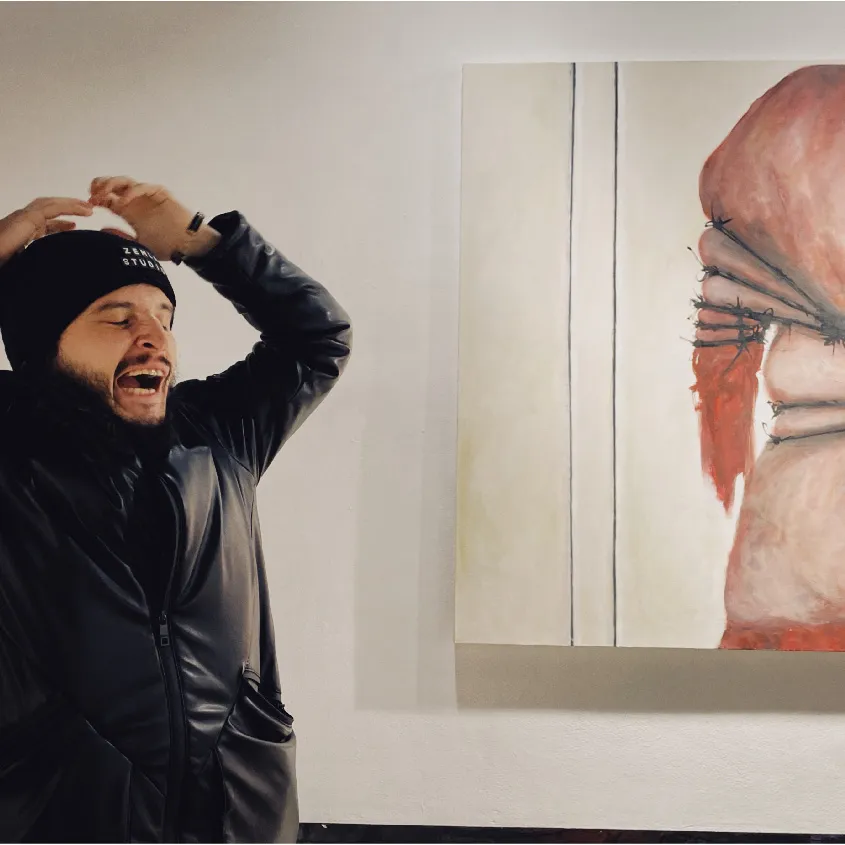
Dr. Myroslav Trofymuk
Born in Lviv. Designer, director, musician, researcher, founder of ZEMLA STUDIO. Master of classical philology and digital marketing, PhD in the history of Ukrainian literature. Member of the National Union of Journalists of Ukraine. Since 2022 he has authored the CENTRUM MUNDI audio show for Polish Radio for Ukraine, continuing the same research into the contemporary music scene in Ukraine and Poland.
Full bio →


