
Meanwhile, experts are drawing attention to dangerous online communities that manipulate teenagers, blackmail them and gradually draw them into ever more brutal behaviour. Dr Konrad Ciesiołkiewicz of Korczak University, an expert on protecting children online, explained how these networks operate, why children’s safety does not conflict with freedom of speech, and how parents and schools can help prevent such incidents.
Attacks in Polish schools and the possible influence of the internet
The conversation with the expert took place on 8 October, after two attacks in Polish schools. That morning, near Wyszków, a 15-year-old former pupil had attacked school staff with a knife. One of them was killed. The day before, in Ostrołęka, a 19-year-old student had injured nine people.
Police were looking into whether an online challenge lay behind these events. According to Konrad Ciesiołkiewicz, however, there are as yet no grounds for saying definitively that the attacks were part of such a challenge.
“Is this part of an internet dare — a so-called challenge — in the narrow, literal sense? I don’t know. I think that is precisely what will be analysed,” the expert said.
At the same time, he stressed that the wider context cannot be ignored: the spread of extremist movements and the recruitment of young people into criminal activity via the internet. European security institutions, he said, have long been warning that young people are being used by criminal groups, extremist organisations and foreign states, Russia among them.
The expert did, however, caution against jumping to conclusions about the specific attacks in Poland.
“That’s what the Internal Security Agency, the police and the other services are for. But what I’m saying is that we cannot shut this out of our minds if we want to draw constructive conclusions without scaremongering and without succumbing to paralysis,” he explained.
In Ciesiołkiewicz’s view, it is important not only to establish the circumstances of individual crimes but also to develop preventive measures that will help protect children and teenagers from online manipulation.
Digital communities that gradually draw young people into violence
The Polish prime minister, Donald Tusk, said that the attacker near Wyszków had been wearing a helmet with a camera and had probably wanted to record or livestream the attack.
Ciesiołkiewicz drew attention to the so-called COM or DECOM communities, which operate in the digital environment and can draw their members into increasingly brutal acts. He compared them to digital cults in which people gradually become dependent on the group and its internal rules.
“These are circles that work a bit like digital cults — highly atomised, individualised ones,” the expert said.
As one of the best known of these organisations he named the group “764”. According to Ciesiołkiewicz, it was founded by a teenager, and the group itself has become an example of how online communities can drag people into destructive activity.
The expert also mentioned the concept of nihilistic extremism used by the FBI. In such circles, ideology may play a secondary role, while destruction itself becomes the main goal.
As of mid-October, however, Polish investigators had not publicly linked the attacks in Wyszków and Ostrołęka to the “764” network. The Minister of the Interior and Administration, Marcin Kierwiński, said there were insufficient grounds to regard the incidents as connected.
From online tasks to self-harm and cruelty
According to Ciesiołkiewicz, young people are recruited across a whole ecosystem of digital platforms — social networks, messaging apps, gaming and streaming services. For vulnerable teenagers, these environments can pose a significant risk.
The expert regards the gradual drawing of children into ever more brutal acts as particularly dangerous. At first, members may be set relatively minor tasks, such as fights. Later the demands become more serious and may involve self-harm, cruelty to animals, marking their bodies and other forms of self-destructive behaviour.
Such acts, the expert says, are often documented, recorded and streamed. Carrying out the tasks becomes a way of winning recognition within the group and cementing one’s own social identity.
Ciesiołkiewicz stressed that young people in such situations may first become victims of manipulation themselves, and later perpetrators or potential perpetrators.
“These young people were manipulated, they became victims, and then they became perpetrators or potential perpetrators,” he noted.
In the expert’s view, this is important to bear in mind so that we do not start seeing all teenagers as a potential threat. Blaming and stigmatising young people can only deepen their frustration and push children away from the adults who could help them.
Blackmail and manipulation: who is most at risk
One of the dangerous tools of such communities is blackmail. Intimate material, personal photographs and images created with artificial intelligence may be used for this purpose.
The expert mentioned a bill presented on 7 October by the MP Monika Rosa on protection against intimate deepfakes, including so-called deepnudes. Such technologies make it possible to alter real photographs of people and create fake images of a sexual nature.
“They make it possible to manipulate an image — a real photograph of, say, a young person — and transform it into a sexual context, in such a way that an untrained eye like mine wouldn’t detect it, and at the same time to blackmail,” Ciesiołkiewicz explained.
According to him, the sexual blackmail of children and young people is one of the common tools of online communities that draw their members into violent or self-destructive behaviour.
Teenagers who are going through a mental health crisis, being bullied, suffering from unrequited love or feeling socially excluded may be particularly vulnerable. The expert also drew attention to people on the autism spectrum, who in certain circumstances may need extra support and protection from manipulation.
Ciesiołkiewicz identified loneliness and a sense of being shut out of society as a common feature of many such situations. It is precisely the need for closeness and acceptance that can make a teenager vulnerable to the influence of charismatic leaders of online groups.
At first such relationships may seem friendly or even romantic. Later, that trust is used for pressure, coercion or blackmail.
Children’s safety and freedom of speech: striking a balance
In Poland, the protection of children online has become part of a wider political debate. In January, President Karol Nawrocki, citing freedom of speech, vetoed the law implementing the EU’s Digital Services Act.
After the school attacks, the debate over the state’s ability to block illegal content flared up again. Donald Tusk stressed that if an attack were livestreamed, the state would not have sufficient tools to block the footage quickly.
Ciesiołkiewicz considers it wrong to set security against privacy. In his view, protecting minors must be a priority, but state intervention must respect the principle of proportionality.
“We are told, and we are being persuaded, that it is a choice between privacy and security. That is a false choice and a false alternative, because we need both security and privacy. But we need one more concept and one more action — proportionality,” the expert stressed.
He also drew attention to the threats posed by hybrid warfare, disinformation and the use of children for criminal and military purposes. Today’s digital risks, he said, call for a rethink of how the online environment is regulated.
“It’s a different world today. And democratic states and institutions need to be strengthened, not weakened. We need regulation in the hands of the state and the European institutions,” Ciesiołkiewicz declared.
At the same time, he acknowledged that no legislation can eliminate the risks entirely. Regulation can give citizens additional mechanisms for protection and appeal, but it will not guarantee safety in every case.
Poland’s Sejm has passed a law on blocking illegal content, and on 13 October the Senate amended it. Among other things, in urgent cases online platforms will have just 24 hours to present their evidence. The amendments now go back to the Sejm, after which the final decision will rest with the president.
What parents and schools can do
Serious as the threats are, Ciesiołkiewicz warns against panic, blanket bans and pointing the finger at young people. In his view, the most important thing is to keep up an open dialogue with children and help them recognise dangerous situations.
“I think the worst thing that could happen now is precisely scaremongering about young people, banning everything in sight and claiming that it’s all their fault. No — it seems to me that we simply need to talk about it normally, in a healthy way,” the expert stressed.
He sees an important role in prevention for schools — notably through the subject “Health Education”, which covers relationships and cybersecurity; civic education, which helps counter disinformation; and media education, which gives pupils the tools to assess information critically.
According to Ciesiołkiewicz, these subjects must not be allowed to become a mere formality. Their job is to teach children to analyse information, recognise manipulation, build healthy relationships and ask for help.
“These are also tools that are lifesaving in the medium and long term, because they shape a reflective and critical approach and make it possible to hold a dialogue with young people instead of speaking only the language of prohibition,” he explained.
The expert also urged people not to demonise digital platforms. Not everything that happens on the internet is dangerous, he said. At the same time, society needs to realise that, with hybrid warfare under way and extremist movements spreading, the issue of children’s safety online calls for a more serious approach.
In Ciesiołkiewicz’s view, effective protection for minors must combine proper regulation of the digital environment, accountability on the part of the platforms, support from adults and systematic prevention work in schools. Bans alone will not solve the problem — what matters is that children have knowledge, support and the chance to talk about danger without fear of being judged. Myroslav Trofymuk / Polish Radio Programme 1
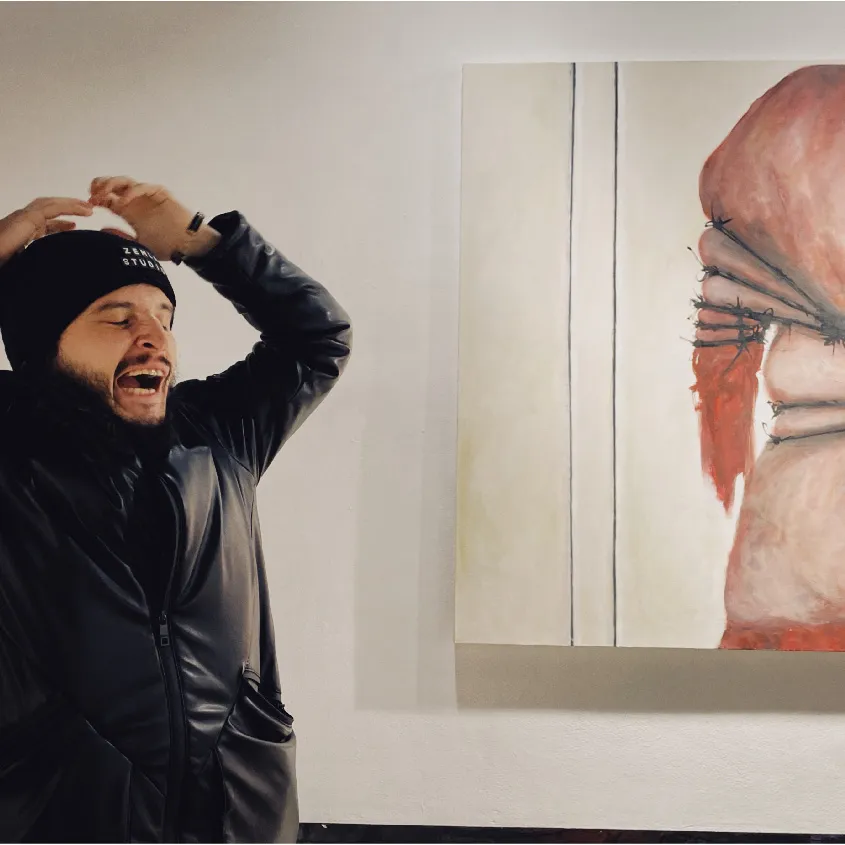
Dr. Myroslav Trofymuk
Born in Lviv. Designer, director, musician, researcher, founder of ZEMLA STUDIO. Master of classical philology and digital marketing, PhD in the history of Ukrainian literature. Member of the National Union of Journalists of Ukraine. Since 2022 he has authored the CENTRUM MUNDI audio show for Polish Radio for Ukraine, continuing the same research into the contemporary music scene in Ukraine and Poland.
Full bio →

