
Why the tech giants allow themselves to ignore European legislators, who makes money from dubious advertising and whether Europe can get to grips with it — Professor Piotr Celiński, a media scholar at Maria Curie-Skłodowska University in Lublin, explains
Is it still possible to restrict the youngest users’ access to social media — and is it even realistic? Professor Celiński is convinced that it is. But, he says, this is not only about children.
“Of course it’s possible. I think all this public concern is not only about how to help children, but also about how to help ourselves. Because these media very often behave rather dishonestly.”
The dishonest practices of social media were also due to be discussed in the Polish parliament. A Sejm committee planned to debate fraudulent advertising on Facebook, but representatives of Meta, the company that owns the platform, did not attend the meeting. Professor Celiński does not rule out that the reason runs deeper.
“I wonder whether we aren’t dealing with a wider problem here. Perhaps Facebook believes it has no need whatsoever to adapt to European legislators. And it can afford to feel so confident because, according to the latest statements from the American administration, in the end only one thing matters — winning the AI arms race against China and the rest of the world. That is why Donald Trump himself often says that the various collateral damage we have to bear — in social life, in the safety of citizens — was probably unavoidable. And there will be no pressure whatsoever from the American administration here.”
Hence, in the media scholar’s view, the behaviour of the tech giants outside the US.
“And if that’s how things look in the States, these companies have no reason at all to really change anything in their policies elsewhere. In recent years, this is what they have been doing. On the one hand, they maximise their profits — and we are talking truly gigantic sums, tens or even hundreds of billions of dollars. On the other, they raise money on the stock market, preparing for precisely this gigantic battle over artificial intelligence and building data centres.”
Ordinary users play their part in this too, the professor says.
“You could say that all of us, by watching these strange ads and, one way or another, taking part in spreading strange content online, are chipping in our two, three, four, five pennies so that these companies can get rich at lightning speed and rise to this challenge.”
The media scholar has even more questions about the mechanisms the platforms use to filter content.
“What’s more, these same companies have very strange content-filtering mechanisms. Meta, for example, works like this: if a particular advertiser doesn’t meet the company’s standards, it simply charges them more, without looking too closely at whether the content is appropriate or not, good or bad. The attitude is: in that case we just price the service much higher. That’s how the business keeps turning, and all of us, unfortunately, take part in it one way or another.”
The big digital corporations enjoy the backing of Donald Trump’s administration, and Trump himself has repeatedly threatened European countries with retaliation, including tariffs, if they get in the way of American business. Under such conditions, can the European Commission and the EU regulate the market effectively?
“Exactly. That is why one may have certain doubts about how effective action can be in Europe, or anywhere else in the world. At the same time, we should remember that we in Europe are still in a fairly privileged position, because here people at least talk about it loudly. There are various circles and various voices insisting that this problem really must be dealt with somehow. Perhaps the solutions will be partial, but one way or another we in Europe are trying to do something about it.”
The media scholar sees the Sejm meeting that Meta’s representatives never attended as one such step. He also mentions Rafał Brzoska, the founder of InPost, whose image has repeatedly been used in fake adverts on Facebook. It was Brzoska who publicly called on Meta’s managers to come to the Sejm and explain themselves.
“This meeting, convened in the Sejm, was meant to be one element of such action — even if only for the sake of appearances — showing that the state is, after all, up to the task. Though it is sad that we need people like Rafał Brzoska for this problem to be taken really seriously in public debate. It is sad that we don’t have the appropriate state regulators, or that those regulators are not effective and strong enough to actually regulate this market.”
But in Professor Celiński’s view, isolated steps will not be enough.
“It seems that without some fundamental changes we won’t be able to do anything serious about this. Because incidents like the ones we are dealing with simply don’t add up to a coherent long-term policy of pressure on these platforms. When these companies’ revenues run to tens of billions of dollars, the negotiations the European Union conducts, or the various restrictions it tries to introduce, amount to a few per cent — literally a few per cent — of what happens on these platforms and how much they earn. That is why we need to act far more decisively here.”
Poland can hardly stand up to the American corporations on its own when, at the same time, it badly needs US support on security. So a joint European response is probably what we should be counting on. The media scholar agrees.
“Absolutely: the more collective the response, the better the chance that it will make an impression on these American companies. And we in Poland really are in a difficult position, but those are political questions that I’d rather not go into here.”
At the same time, the professor sees a real chance of agreement among European countries.
“It looks as though there is a very good chance of agreement despite the differences between the European countries themselves — on this we share a great many interests and values. The question is how far we are able to lobby for our interests and put pressure on these American companies, and how far we can build up a certain resilience. Because, as we said, for the Americans tech platforms are a priority when it comes to political support abroad.”
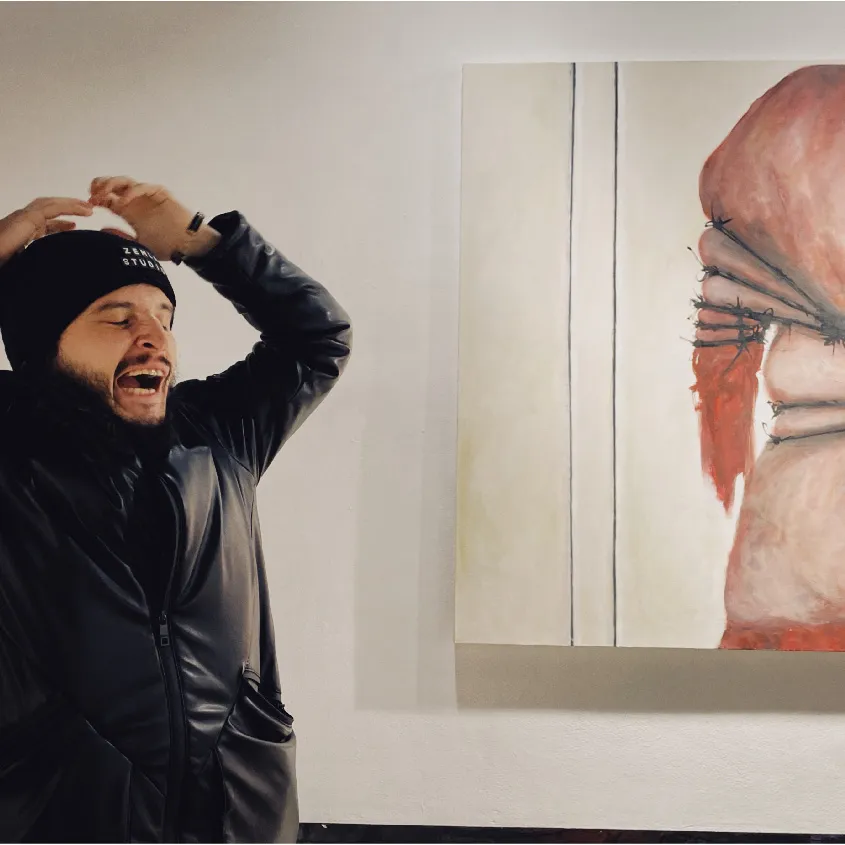
Dr. Myroslav Trofymuk
Born in Lviv. Designer, director, musician, researcher, founder of ZEMLA STUDIO. Master of classical philology and digital marketing, PhD in the history of Ukrainian literature. Member of the National Union of Journalists of Ukraine. Since 2022 he has authored the CENTRUM MUNDI audio show for Polish Radio for Ukraine, continuing the same research into the contemporary music scene in Ukraine and Poland.
Full bio →

